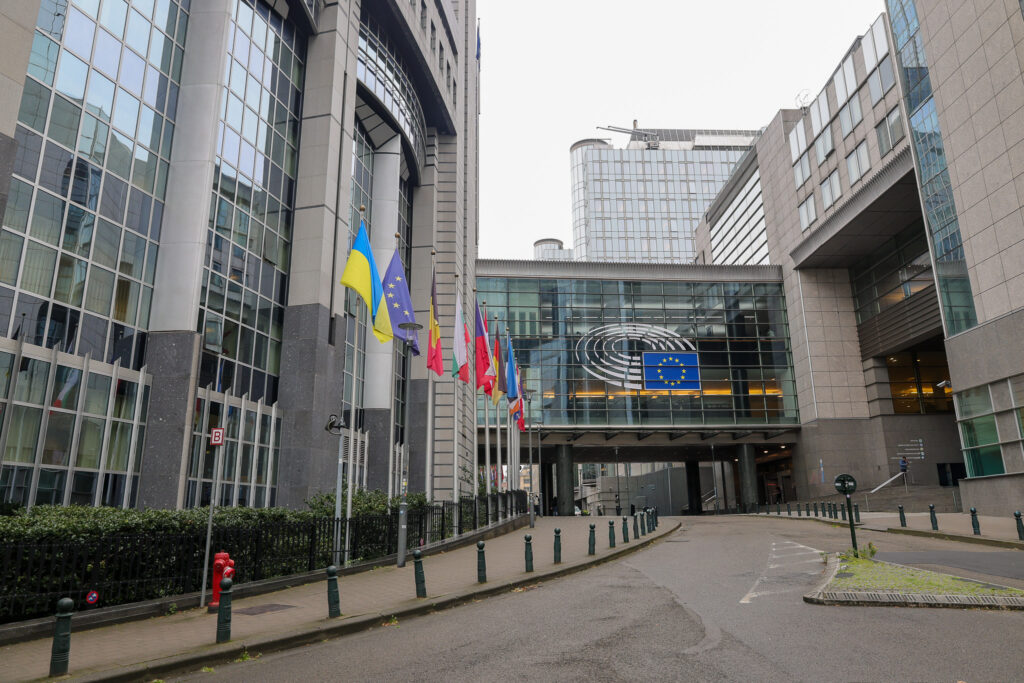
From October 12 through 14, the MOVE-certificate was on the agenda during the European Week of Regions and Cities (EWRC) 2026 in Brussels. Together with the Rijnland Instituut, a partner in the project, we highlighted the importance of recognizing learning and work experience across borders.
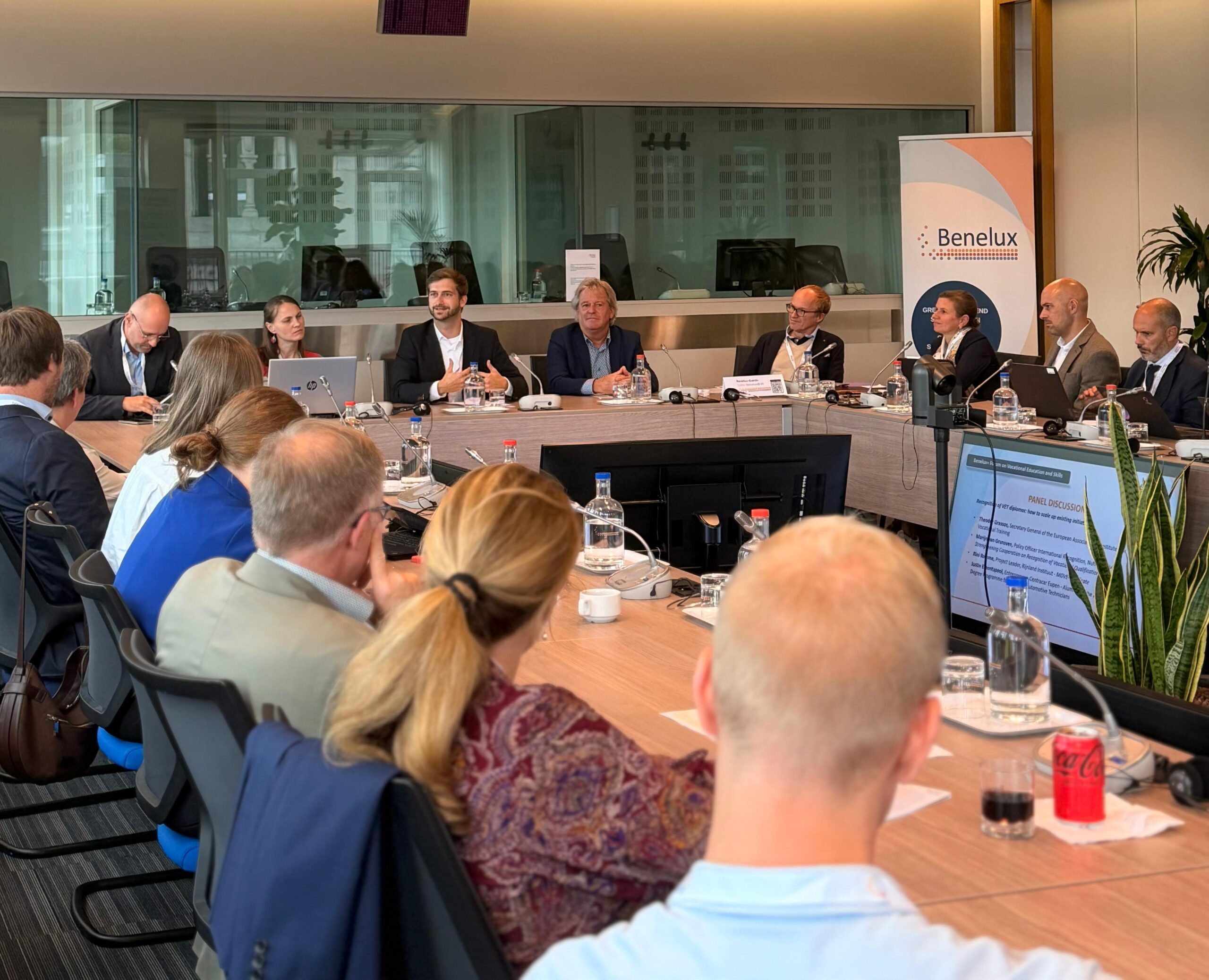
On Tuesday, the project participated in the Benelux+ Forum on Vocational Education and Skills, where educational institutions, governments, employers, and European stakeholders from the Benelux countries, Germany, and France discussed labor market shortages, cross-border mobility, and vocational education.
A panel discussion focused on how the recognition of vocational education diplomas across borders can be scaled up and what we can learn from existing initiatives. Rini Romme (project leader) and Wolfgang Arens-Fischer (research director) from the Rijnland Instituut joined Theodor Grassos, Marijn van Grunsven, and Justin Emontspool on the panel. The significance of such instruments for employers and for access to the labor market was also discussed.
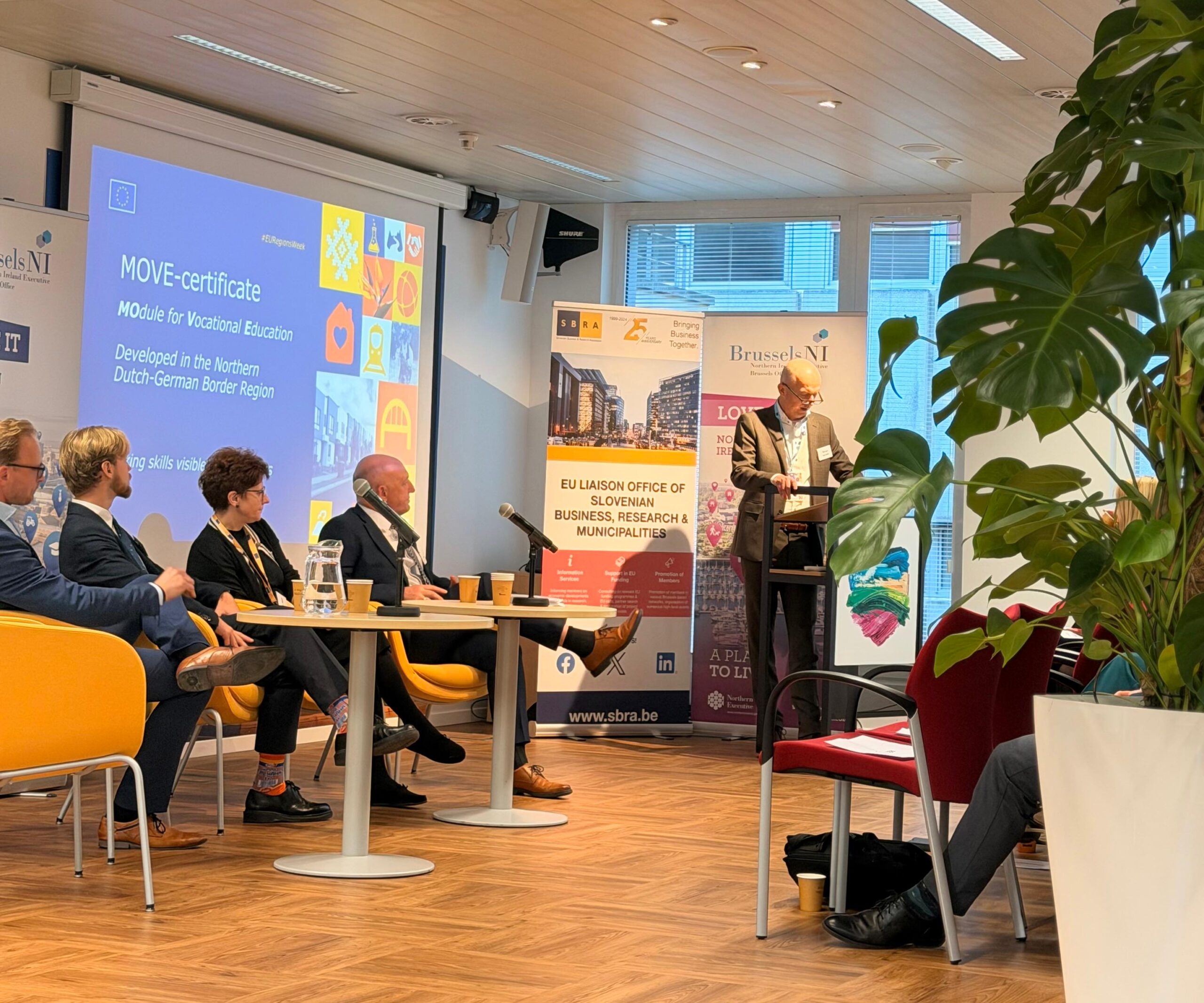
Our message: studying and working across borders offers significant benefits to vocational education students, but without recognition, that experience often goes unnoticed. Furthermore, a degree from one country does not automatically grant access to the labor market in another country. The MOVE-certificate demonstrates the knowledge, skills, and competencies acquired in an international context, whether through an internship, volunteer work, or an exchange program.
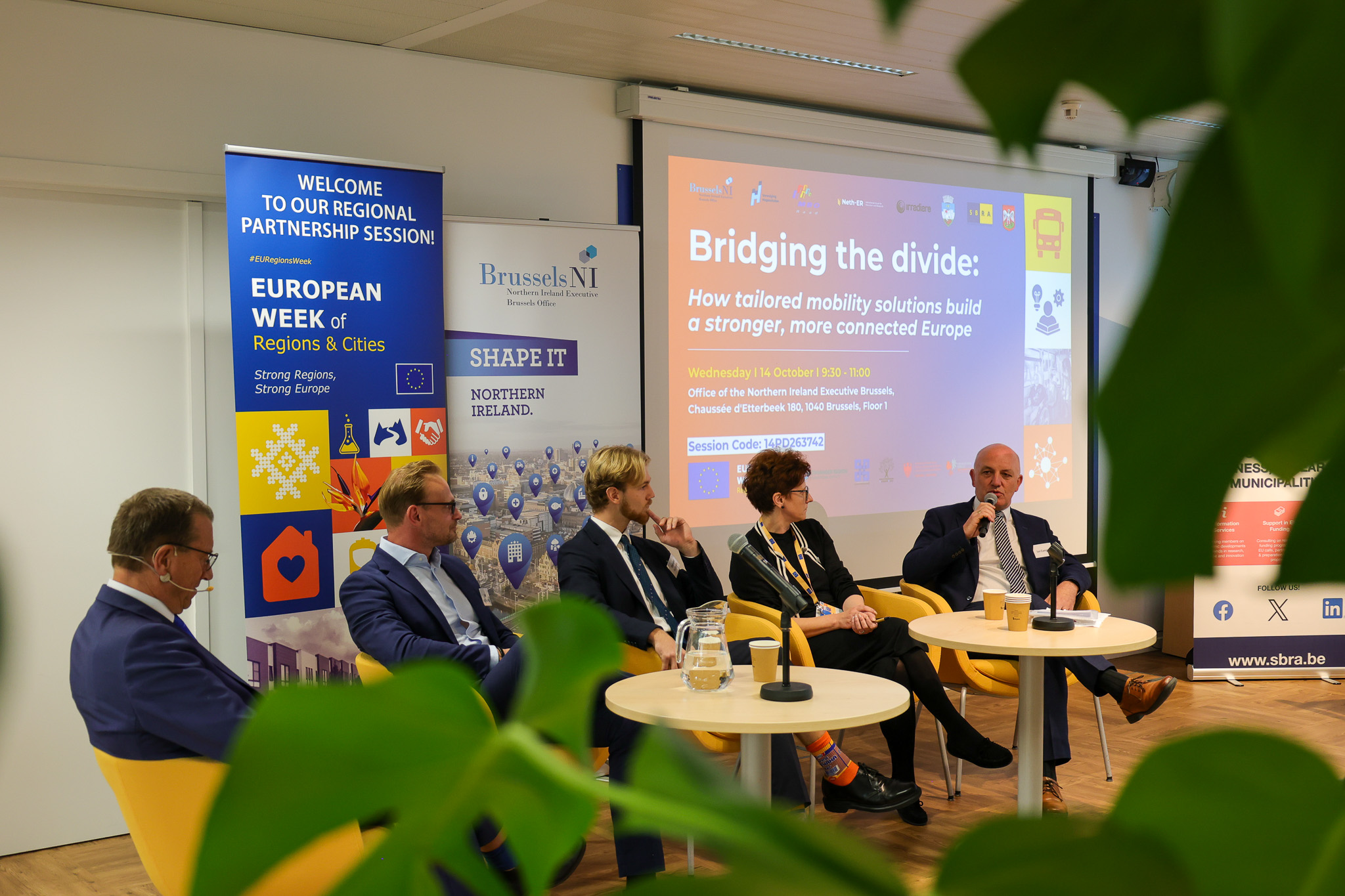
On Wednesday, Werner ten Kate, alderman for the municipality of Hardenberg, presented the MOVE-certificate as a regional example during the program organized by Neth-ER, the MBO Raad (the Netherlands Association of VET Colleges), and the Association of Universities of Applied Sciences on innovative and inclusive mobility.
The MOVE-certificate is made partly possible by the Regio Deal Zuid- en Oost-Drenthe. Building on the new contacts and discussions from Brussels, we are continuing to work with our partners to promote the recognition of cross-border learning.